
RGB League 2025 — X-Men vs. Street Fighter: The Bitter Pill
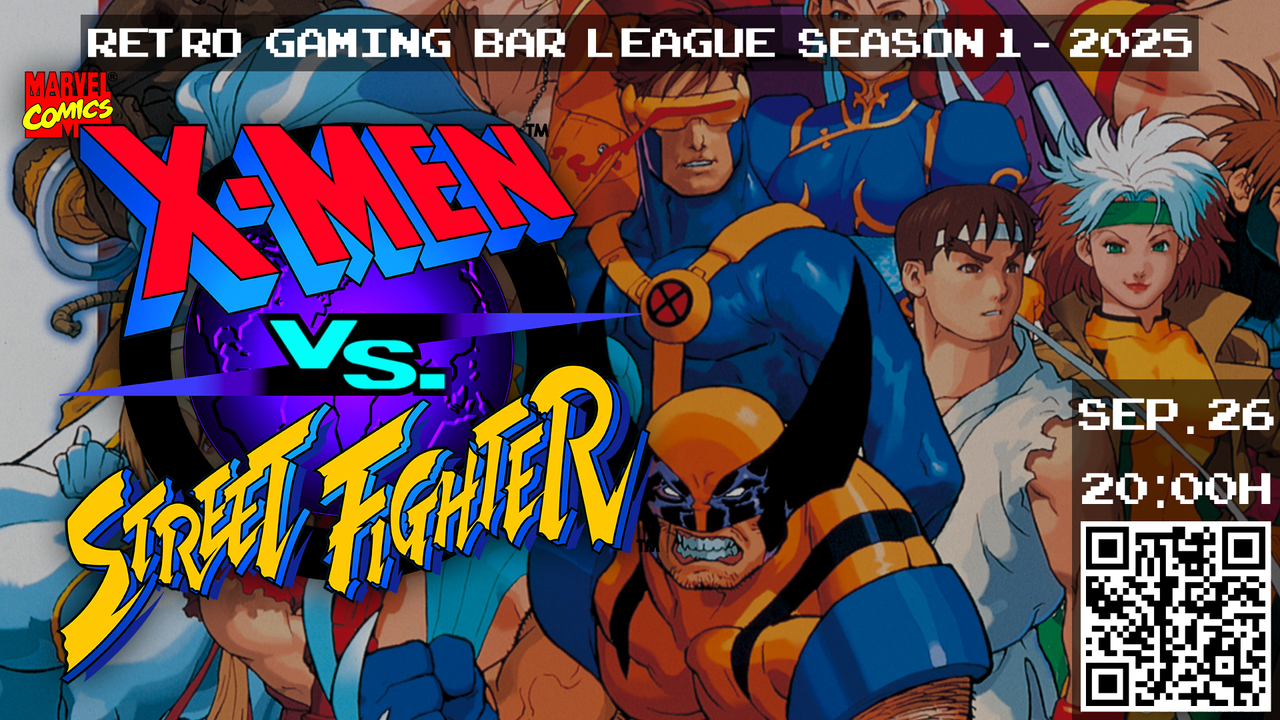
Tournament #5 — September 2025 | X-Men vs. Street Fighter (PlayStation, 60Hz)
Everything Was Finally Ready. Except the Audience.
If you'd asked me after our Tekken 3 tournament what I wanted most for RGB League, my answer would have been simple: time. Time to finish the projects we'd started. Time to fix the technical problems that had haunted our first four tournaments. Time to finally deliver the experience I'd been imagining since we launched the league. And thanks to our summer break in July and August, that's exactly what we got. For two months, I worked on some of the most ambitious technical improvements we'd attempted at Retro Gaming Bar. By September, I was genuinely excited about what we'd accomplished. The controllers were finally sorted out. The streaming infrastructure had been completely transformed. Our internet connection was more reliable, our broadcasts looked better, and our tournament tables were finally doing what I'd wanted them to do from the beginning. I was convinced we were about to have our best tournament yet. And then five people showed up.
Five.
After thirty-one competitors at Tekken 3. I honestly didn't know what to think. But before we get to that rather unpleasant surprise, let me tell you why I'd been so excited about this tournament in the first place.
The End of Controller Nightmares
Remember the first Mortal Kombat II tournament, when our champion had to play as Player 2 to avoid accidentally exiting the game? Or Street Fighter Alpha 3, when incorrectly mapped buttons rendered two tournament tables practically unusable? Or perhaps the unforgettable Ultimate Mortal Kombat 3 evening, when I was desperately untangling wires inside a gaming table with twenty-seven players waiting to begin? Well, those days were finally over. During the summer break, I completed our Bring Your Own Controller (BYOC) project. And I can't overstate how much that meant to me. This wasn't simply adding a few USB ports. I'd fundamentally redesigned the way our gaming tables handled controllers, replacing the rigid configurations we'd been struggling with since opening RGB. We installed external USB extensions, allowing controllers to be disconnected and replaced without opening the tables. More importantly, the new controller management system could recognize supported devices and apply their configurations automatically. For the first time, we could simply swap a controller and continue playing. No exposed wiring. No complicated emergency procedures. No moving players between tables because one controller had decided to stop cooperating. And if a controller failed during a tournament, the solution was no longer a technical investigation that could bring the entire evening to a halt. We could just replace it. Beautiful. For our upcoming PlayStation tournament, I also acquired new 8BitDo controllers with a classic PlayStation-style grip, making the experience more comfortable and familiar for the players. After everything we'd been through, having that level of flexibility felt almost unreal. I was ridiculously proud of the achievement.
Goodbye, Phone Camera. Hello, Proper Streaming!
But BYOC wasn't the only major project we'd completed. Remember how our first Mortal Kombat II final had been recorded on a mobile phone? Or how our earliest Twitch broadcasts relied on pointing that same kind of device at a gaming screen? We were finally leaving those days behind as well. During the break, we developed the capability for our tournament gaming tables to stream gameplay directly. No more phones filming television screens. No more improvised camera angles or spectators accidentally walking into the shot. The game itself was now the source of the broadcast. Combined with the internet infrastructure improvements we'd made after the thunderstorm at Tekken 3, we could deliver substantially better streaming quality. We also introduced OBS into our production workflow, complete with proper overlays, player tags, and a much more professional presentation. Suddenly, our tournaments looked like actual gaming broadcasts. The difference was enormous. And when I considered how much we'd achieved during those two months, I couldn't help feeling that we'd finally crossed an important threshold. We'd gone from a tournament that barely had a mobile-phone recording to a setup capable of producing proper live gaming streams. From hardwired controllers that required opening furniture to interchangeable devices with automatic configuration. From constant improvisation to infrastructure that had been deliberately designed for competitive gaming. This was what we'd been working toward all year. Now all we needed was a great tournament to celebrate it.
Thirty-One Players Become Five
For our September tournament, we'd chosen X-Men vs. Street Fighter on the PlayStation. We hadn't simply picked the game at random. Our Discord community had been involved in voting for what we'd play next, and this was the title we'd selected together. It was another exciting crossover fighting game, and I was looking forward to seeing how it would perform with our newly improved tournament infrastructure. After the momentum we'd built earlier in the season, I had high expectations. Our tournaments had been growing. Tekken 3 had attracted thirty-one competitors, our biggest turnout yet, and we'd spent the entire summer making the experience better. Surely, things could only move forward. Well, apparently not. When registrations settled and tournament day arrived, we had just five participants. I was stunned. What the hell had happened? Had the summer break interrupted the momentum we'd worked so hard to build? Was X-Men vs. Street Fighter simply not a popular enough choice, despite being selected through our community discussions? Had something changed in our audience? Were people busy with other things? I genuinely had no idea. And the frustrating part was that I still don't have a definitive answer. We'd done so much work to make the tournaments more attractive, more reliable, and more enjoyable. Yet somehow, when we were finally ready to deliver a significantly better experience, almost nobody came to experience it.
That was a bitter pill to swallow.
Our X-Men vs. Street Fighter Champions
Despite the disappointing attendance, we went ahead with the tournament and had a genuinely enjoyable evening with the players who came.
And that's something I don't want to overlook.
Five participants might not have been what we'd hoped for, but those five people still showed up, competed, and helped us continue building RGB League.
Congratulations to SinysterOG, who claimed the title with a 4–1 record, and to every participant who joined us for this unusual chapter in RGB League history! View the complete tournament results on Challonge(Оpens in a new tab.)
You Can't Fix Everything with a Screwdriver
Looking back, there's something almost comical about how RGB League had been teaching me lessons. During our first tournaments, we'd attracted increasingly enthusiastic crowds despite having a mountain of technical problems. Now we'd solved many of those problems, substantially improved the experience, and barely had enough players for a tournament. What exactly was the universe trying to tell me? The reality was that we'd spent months concentrating on the technical foundations of RGB League, because those were the problems we could clearly identify and solve. A controller doesn't work? Fix the configuration. Streaming quality is poor? Improve the infrastructure. Players can't see the matches? Develop a way to display the games elsewhere. These were difficult problems, but at least they had understandable solutions. Getting people to participate consistently was something else entirely. I was starting to realize that having a technically excellent tournament setup didn't automatically mean we had a sustainable tournament format. We needed to think more carefully about variety, game selection, audience interests, and how to maintain community engagement throughout the season. The irony was that we'd already begun involving the community in those decisions through Discord. We'd asked people what they wanted to play, and we'd listened. Yet the turnout still surprised us. I knew we needed to experiment with different types of games and competition formats, not simply organize another fighting-game tournament every month. But after spending the entire summer rebuilding our controller and streaming infrastructure, I honestly didn't have the energy to launch another enormous project immediately. At least the direction was becoming clear. We'd have to address that challenge in the next season. For now, we had a tournament to play.
Our First Real Setback
It would be easy to describe this tournament as a failure simply because of the attendance. But that wouldn't be entirely fair. From a technical perspective, we'd made extraordinary progress. Our controller system had finally become flexible and reliable. Our tournament tables could stream their games directly, and our OBS production setup brought a completely new level of professionalism to the broadcasts. We'd delivered improvements that had seemed almost impossibly ambitious just a few months earlier. And the five players who participated still had a great time. But personally, I couldn't ignore what the attendance represented. For the first time, RGB League had taken a significant step backward in an area that mattered just as much as our technical achievements. And unlike the problems we'd faced before, I couldn't go home, open my laptop, and start writing code until it was fixed. I had to accept that building a successful community event required more than technical determination. It required understanding people, keeping them interested, and being willing to experiment beyond the familiar formats we'd relied on so far. That realization would become an important influence on the direction of RGB League Season 2. For now, I was left with a mixture of enormous pride and genuine disappointment. Pride in what we'd built. Disappointment that so few people had been there to experience it.
We'd finally solved so many of the problems that had nearly destroyed our earlier tournaments. And in return, we'd discovered a challenge that no amount of controller remapping could solve.
The good news was that RGB League wasn't going anywhere. We'd come too far to give up. But this time, the next step forward wasn't quite as obvious as replacing a broken controller.
Keep Exploring
RGB League 2025 — Tekken 3: Thunderstruck!
Tournament #4 — June 27, 2025 | Tekken 3 (PlayStation) | 31 competitors
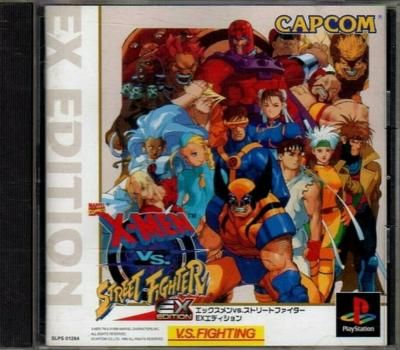
X-Men vs Street Fighter EX Edition
X-Men vs. Street Fighter EX is a crossover fighting video game developed and published by Capcom, it is a port for the Sony PlayStation of the arcade game X-Men Vs Street Fighter. This version of was released February 26, 1998
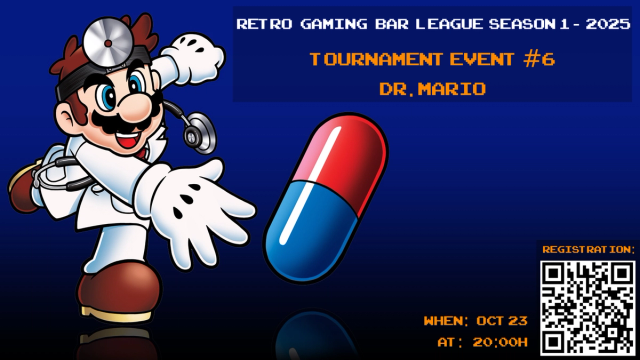
RGB League 2025 - Dr. Mario: The Right Prescription
Tournament #6 — October 23, 2025 | Dr. Mario (NES, 60Hz)