
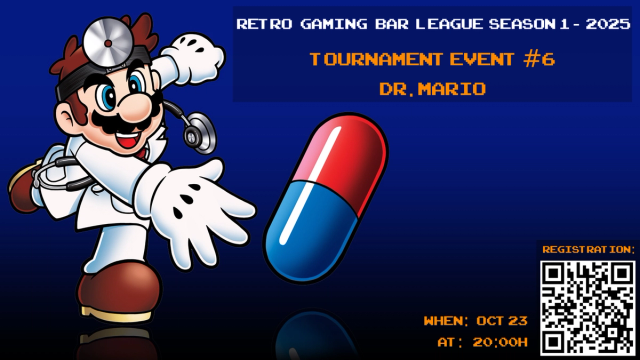
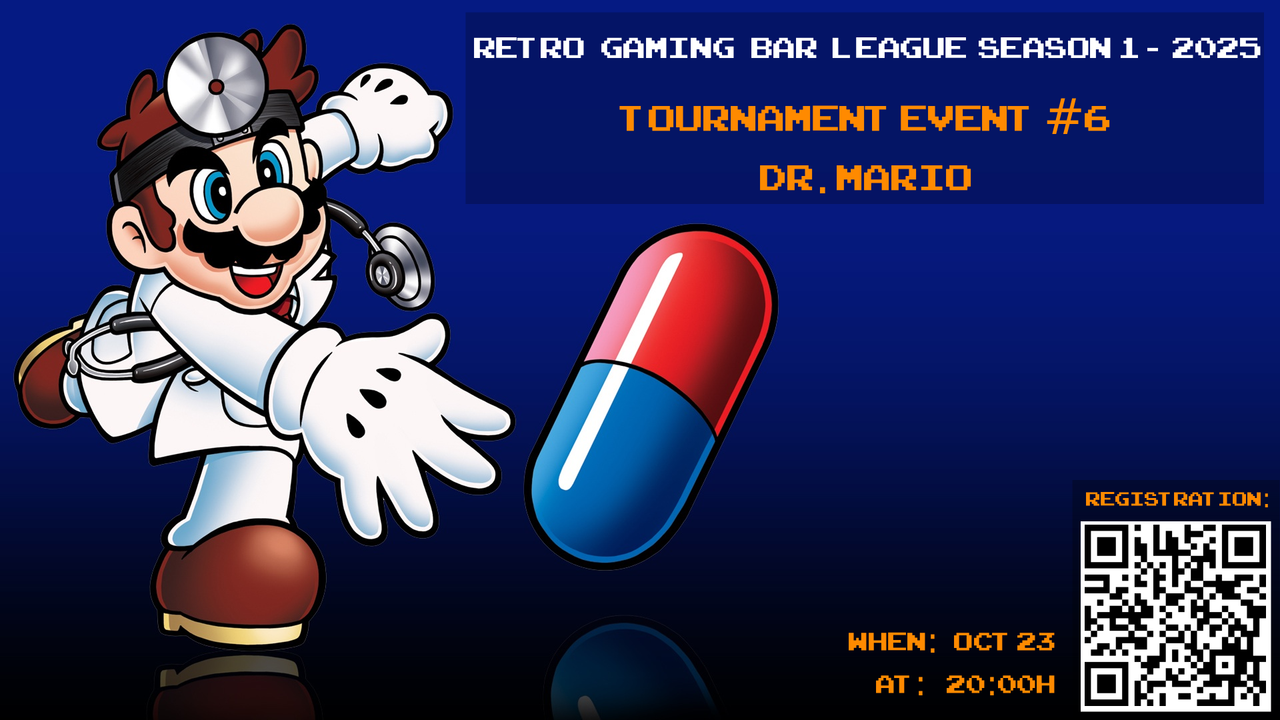
RGB League 2025 - Dr. Mario: The Right Prescription
Tournament #6 — October 23, 2025 | Dr. Mario (NES, 60Hz)
Doctor, We Have a Problem
After our September X-Men vs. Street Fighter tournament, I found myself dealing with a problem I wasn't particularly accustomed to. Our equipment was working. Our streaming infrastructure was finally looking professional. The controllers had stopped trying to ruin my life. And yet, only five people had participated in the tournament. After attracting thirty-one competitors just a few months earlier, that was a rather unpleasant reality check. We'd spent so much time making RGB League technically better, but apparently, that wasn't enough to guarantee that people would show up. Naturally, I did what I usually do when something doesn't make sense. I went into analysis mode. Was the summer break responsible for the drop in participation? Had we lost momentum? Was X-Men vs. Street Fighter simply the wrong game? Or were we reaching the limits of how many people wanted to compete in fighting-game tournaments? I had theories, but no convincing answers. And since I couldn't exactly fix the participation rate by opening my laptop and changing a few configuration files, I decided it was time for an experiment.
What if we stopped organizing fighting-game tournaments for a change?
A Prescription from My Son
The choice of game was surprisingly easy. My son loves Dr. Mario. And when I started thinking about possible alternatives to our usual fighting games, it occurred to me that his favorite puzzle game might be exactly what we needed. Dr. Mario had several things going for it. It was familiar, easy to understand, surprisingly competitive, and, most importantly, its two-player mode fitted neatly into the double-elimination bracket format we'd already been using. We wouldn't have to reinvent our tournament organization or introduce completely new scoring mechanics. Just pick a different kind of game and see what happened. It seemed like a relatively simple experiment, which was quite refreshing considering our recent habit of turning every improvement into a major engineering project. And so, for our sixth RGB League tournament, we traded punches, fatalities, and super combos for colorful pills and viruses. What could possibly go wrong? Actually, this time, things went rather well.
Another Month, Another Technical Upgrade
Of course, just because we'd decided to experiment with the game selection didn't mean we'd stopped improving our technical setup. During October, we completed another important addition to our tournament infrastructure: an HDMI matrix switch. Until then, we'd made enormous progress with direct streaming from our gaming tables, but switching between matches and tournament stations still wasn't as convenient as I wanted. The matrix allowed us to switch seamlessly between the three tournament tables, making it much easier to follow the action wherever it was happening. We also improved our OBS presentation with new three-dimensional RGB logo assets, adding another layer of polish to the broadcasts. Looking back, the amount of infrastructure we'd built since our very first Mortal Kombat II tournament was almost ridiculous. We'd gone from recording a final on a mobile phone to having multiple gaming tables feeding into a dedicated streaming setup, complete with overlays, player information, and proper switching capabilities. And now we were about to use all that technology to broadcast two people throwing colorful pills at cartoon viruses. I love this business.
A Different Game. A Different Crowd.
When tournament day arrived, I was cautiously optimistic. I certainly wasn't expecting another thirty-one-player event, but I desperately wanted to see whether the previous month's turnout had been an isolated disappointment or a sign of a bigger problem. And Dr. Mario delivered. Fifteen competitors joined our tournament, three times the participation we'd seen in September, and we had plenty of spectators enjoying the competition as well. It wasn't the enormous crowd we'd attracted for Tekken 3 or Ultimate Mortal Kombat 3, but it was a very welcome return to a healthy tournament atmosphere. More importantly, something interesting was happening. We were attracting a different kind of players. People who weren't necessarily interested in competitive fighting games were suddenly enthusiastic about participating in RGB League. Puzzle-game enthusiasts had an opportunity to demonstrate their skills, and the competition had a completely different atmosphere. For the first time in our tournament history, two women were om top 3. That was a wonderful milestone, and it reinforced something I'd been starting to suspect for quite some time. Our previous tournaments hadn't necessarily been appealing to everyone who loved retro games. They'd primarily been appealing to people who loved fighting games. And those aren't quite the same thing.
One Frame. One Winner. An Entire Bar Cheering.
Content from YouTube is disabled.
Enable it in - Cookie Settings
And just when I thought Dr. Mario had already delivered everything we could ask for, the semifinals gave us one of the most incredible moments of the season. One match was decided by a single frame. Yes, you read that correctly. One frame was all that separated the two competitors. The tension was unbelievable. Spectators were gathered around the TVs, following our Twitch broadcast and cheering for their favorite players as the match reached its dramatic conclusion. We still didn't have our big-screen projector setup, but for those few moments, it hardly mattered. The entire bar was caught up in the competition, watching a puzzle game deliver the kind of excitement you'd normally associate with a fighting-game grand final. And I couldn't help smiling at the irony. We'd spent months building sophisticated streaming infrastructure, improving controller support, and trying to make our tournaments more entertaining. Yet one of our most memorable competitive moments came down to two players, a handful of falling pills, and a single frame. Who would've thought Dr. Mario could be such an adrenaline rush?
Our Dr. Mario Champions
The experiment gave us an exciting competition, a fresh group of contenders, and a fantastic result.
Congratulations to pr0faka, who claimed the championship with an undefeated 5–0 record, and to everyone who helped make our first puzzle-game tournament such an enjoyable evening! View the complete tournament results on Challonge(Оpens in a new tab.)
Memorable Moments
The Results Were In
I left the Dr. Mario tournament feeling something I hadn't felt after our previous event. Relief. Not because we'd broken another attendance record or suddenly discovered the perfect formula for organizing tournaments. We hadn't. But we'd tested an idea, and the result had given us a reason to be optimistic again. The five-player turnout in September clearly hadn't meant that RGB League was finished. There were still people who wanted to compete, still spectators who enjoyed the atmosphere, and still opportunities to grow our community. We simply needed to broaden our horizons. The fighting-game tournaments had been wonderful, and they'd helped establish the league.
But by concentrating so heavily on one genre, we'd unintentionally limited the kinds of players we could attract. Dr. Mario showed us that different games could bring different communities together under the same RGB League banner. That was an incredibly valuable discovery. And it opened up all sorts of possibilities. What about racing games? Cooperative challenges? High-score competitions? Other puzzle games? Could we create tournament formats that allowed people with completely different gaming interests to participate throughout the season? The more I thought about it, the more exciting the possibilities became. Unfortunately, there was still the small matter of actually implementing all those ideas. And after the enormous technical workload we'd already completed that year, I honestly didn't have much energy left for another major overhaul before the season ended. But I was already thinking ahead.
Sometimes the Best Upgrade Is a Different Game
One of the most valuable lessons from our first RGB League season was that not every problem requires a technical solution. Sometimes you can spend months perfecting your equipment, developing sophisticated systems, and making the entire experience more professional, only to discover that what people really need is something different to play. That didn't make all our previous work unnecessary. Quite the opposite. Thanks to those improvements, we now had a solid technical foundation that could support a much wider variety of events. We just needed to start taking advantage of it. And Dr. Mario had given us the encouragement to do exactly that. By the end of the evening, I was no longer worrying quite so much about whether our league had lost its momentum. Instead, I was thinking about the possibilities for the following year.
We'd spent most of Season 1 learning how to organize tournaments properly. Maybe Season 2 should be about discovering just how many different kinds of tournaments we could organize. And to think that this particular revelation started because my son really liked throwing colorful pills at viruses.Sometimes the best ideas come from the most unexpected places.
Thanks, Doc. Just what the league needed.
Keep Exploring
RGB League 2025 — X-Men vs. Street Fighter: The Bitter Pill
Tournament #5 — September 2025 | X-Men vs. Street Fighter (PlayStation, 60Hz)
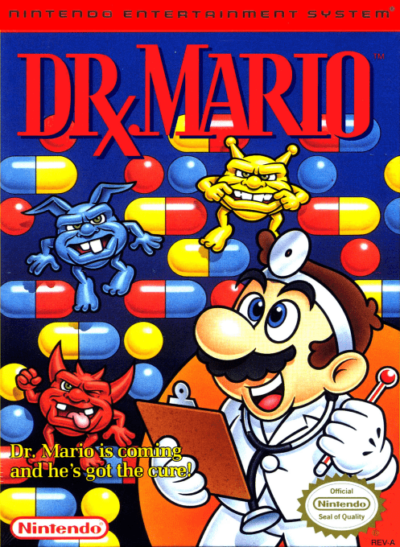
Dr. Mario
In this Tetris-style game, you play as Dr. Mario, who must drop differently coloured pills onto viruses to remove them from the bottle. Each pill is split into two, with each side a different colour. Match that colour to the colour of the virus, and it will be removed from the bottle. Included in the game is the normal mode, a time trial, and a two player battle mode to see who can remove the most viruses.
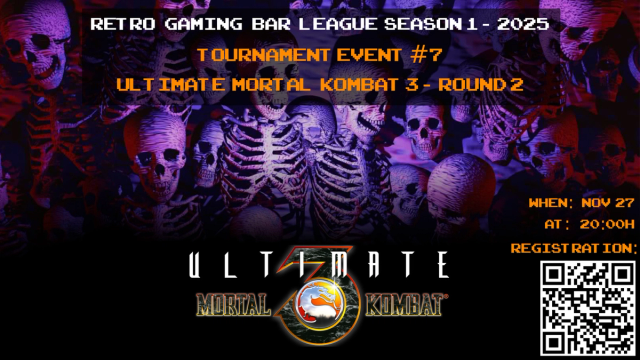
RGB League 2025 — Ultimate Mortal Kombat 3: Almost a Flawless Victory?
Tournament #7 — November 27, 2025 | Ultimate Mortal Kombat 3 (Sega Genesis, 60Hz)