Tetris & Dr. Mario

Two of the most popular puzzle games return, but now together in an exclusive compilation for SNES. The games have a slight graphical update when compared with the original Game Boy and NES games, but the gameplay remains totally faithful to the games released for both platforms. In Tetris, the main objective is to pile blocks that will fall down continuously, in order to create a row or "line" without spaces. For this collection, the game comes with two bonus options: 2 PLAYER GAME (absent in the NES version) and VS. COM (absent in both versions), with 3 CPU opponents available, each one representing a difficulty level (EASY, MEDIUM, and HARD, respectively). In Dr. Mario, the objective is to eliminate all the viruses contained in a big bottle. Dr. Mario (situated in the upper-right side of the screen) will throw capsules with 6 different color combinations (Red-Red, Red-Blue, Yellow-Yellow, Red-Yellow, Blue-Blue and Blue-Yellow) in order to line up at least four viruses or capsules of the same color horizontally or vertically and to make them disappear. In this compilation, the game comes with a bonus option: VS. COM, where you'll face the CPU players: Blue Virus (EASY), Yellow Virus (MEDIUM), and Red Virus (HARD). For competitive players in both games, there is Mixed Match, where you and a friend can play Tetris and Dr. Mario like a tournament! Adjust the handicap levels, play time, music, and other settings to balance your different skills. The game order is: TETRIS B-TYPE (clear a certain amount of lines), DR. MARIO (disinfect a predetermined number of viruses) and TETRIS A-TYPE (clear lines until the time expires). At the end of the time limit, the player with the highest score is the winner.

Meta

RGB Live data

Total times played
333
Total hours played
514:51

Refresh Your Memory

Content from YouTube is disabled.
Enable it in - Cookie Settings

Open it in YouTube

Keep Exploring

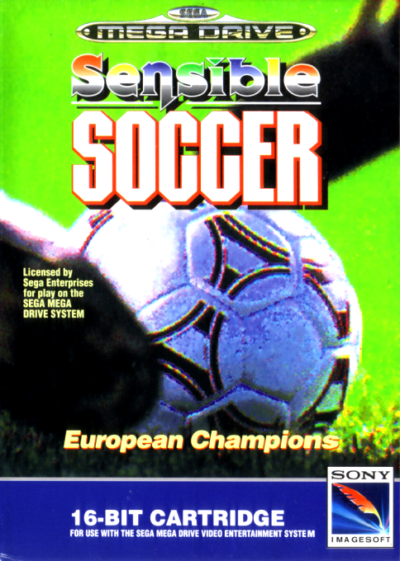
Sensible Soccer - European Champions

Sensible Soccer - European Champions

With the original Sensible Soccer having sold hugely, this updated version was released some months later (and then used as the basis for the later console versions). The teams are updated, with the sides present in the 92-93 European tournaments included, and the player names updated to take transfers into account. The game was tidied up and changed in a number of areas. The most significant change is the addition of red and yellow cards for discipline (2 yellow card offenses or one "professional foul" (denying your opponent a clear goal-scoring opportunity) results in that player being sent off). The goalkeepers have been improved in skill, and the 1994 World Cup Qualifying tournament was added.

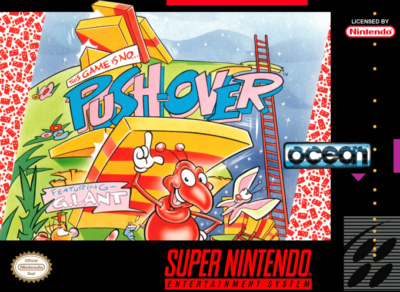
Push-Over

Push-Over

You're playing a small ant that is willing to help a friend in rather inconvenient situation. Apparently, your friend, doggie, likes to eat cookies that has his picture on their box, and he got himself so carried away that he lost the balance, and a bag of cookies fell deep down into an ant-hill. Now, you're goin' in, in a mission of solving puzzles, and retrieving the cookies for your friend. Now, this ant-hill is a bit different from the ones you saw, and especially from the one you live in. It's path is filled up with boulders, and all the gates, and you must travel the quest to find the cookies. After each different place inside, you'll fins a small bag of cookie, and bring it back to your friend doggie. The main quest consists of you carrying your-size boulders, and placing them in a well imagined line, so when you push the exact one, all must fall, and the one that marks the end must fall the last, or the door will stay shut permanently. Beside we know that ants are very easy, and can live almost every fall, you cannot practice that, so if you jusp from a little bit too high position, don't expect much, but to retry the level. Every block, or boulder in a game has a different markings. Like for example, the yellow ones are bricks you can push, and they will just as easily fall, and push, or not, the brick in front of it. The red ones will do the opposite, you cannot push them, and if the yellow, or any other brick hits it, it'll continue falling back to the other side. Some bricks explode when you push them, or other brick hits them, and that way they leave the hole, so your brick can continue spining, or yet again, not. Some spin without stop, 'til they hit some other brick that can fall, some replaces the spaces, like building a bridge on that place, some go high and when hit the top, they stick to it, and push, or not, the brick in front of them. Anyway, that's the game basics. Each level gives you the new code/password, so you can continue from the position where you ended each time you type that code. Perspective of your ant is like in any other platform game, and you control it with arrow keys, or joystick. But beware, the time is clicking, so you'll have to solve each level in a hurry.


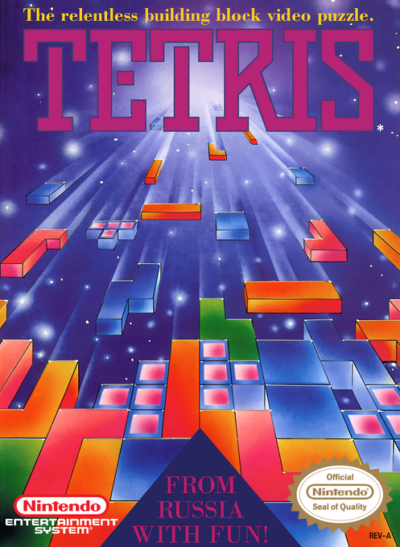
Tetris

Tetris

This version of Tetris is one of many conversions of the famous block-stacking game, as well as the best-known (but not the only) version on Nintendo's first home console. The goal is to place pieces made up of four tiles in a ten-by-twenty well, organizing them into complete rows, which disappear. As rows are cleared, the pace of the game increases, and the game ends if the stack reaches the top of the well. The game offers two different modes of play, "Type A" and "Type B". "Type A" is a standard endless mode, where the speed of the game increases every ten lines, with an option for the starting level when beginning the game. "Type B", on the other hand, is a race to clear 25 lines, with options for both drop speed and starting garbage. In both modes, successful play is rewarded with cute animations. There are also three different background songs to choose from.