

FIFA International Soccer

The game that started the best-selling series licensed by football's world governing body, this first installment in the long running series used a dimetric (colloquially known as "isometric") viewpoint, previously unusual in football games but quickly imitated by several titles. The televisual presentation, one of the unique points of the early EA Sports titles, with hosts introducing the matches, was another thing making the game stand out from a market dominated by Sensible Soccer and Kick Off games. Based on international teams (with fictional player names), their abilities in each skill area rated out of 10 to give the player an overall impression of how good they are. The options available follow the standard set: fouls and offsides can be toggled on and off, the match length can be set, and if the timer operates continuously, or only while the ball is in play. Gameplay privileges quick runs, short passes and blistering shots outside the penalty box, and set pieces are controlled by moving a box into the target area for the ball, and then passed, lobbed or kicked directly. On the tactical side, formations can be selected, with 5 different strategies also available (although not all of these combinations make sense) as can the team Coverage - the areas which defenders, midfielders and strikers cover.

Meta

RGB Live data

Total times played
45
Total hours played
07:40

Refresh Your Memory

Content from YouTube is disabled.
Enable it in - Cookie Settings

Open it in YouTube

Keep Exploring

Nintendo World Cup

Nintendo World Cup

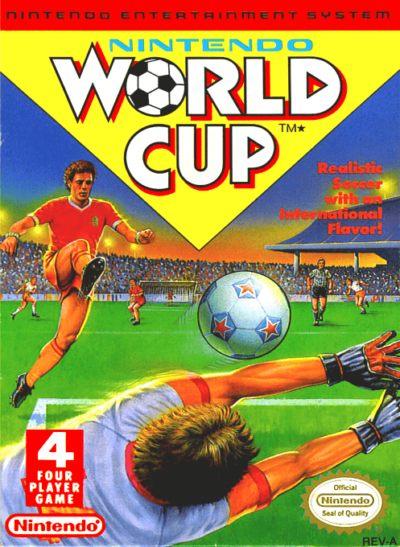
This soccer game was made at the time when Nintendo introduced their four player adapter, and was probably made for the four playing purpose. This is shown clearly when you choose to play 2 or more players. Then you can choose between many different ground layers, like ice, grass and stone, which adds to the replayability. When you play a one player game you play the world cup as one of the top soccer countries of that time, and you meet countries in a fixed order. Cameroon in the first match and the final is against West Germany. In an old-school fashion you lose when you play a draw, there's no extra time whatsoever. In the game you always steer only one character, which you choose before the match starts. You can then give simple orders to you team-mates, like pass, tackle and shoot. Your moves are also limited to these moves. The game is totally lawless, so feel free to make elbow tackles without a wink from the referee. Probably it was made this way to be funnier to play against friends.
Tony Hawk's Pro Skater 2

Tony Hawk's Pro Skater 2

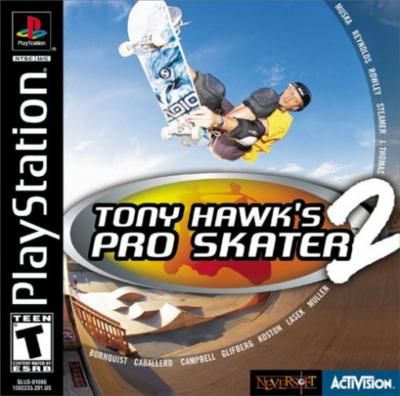
Tony Hawk's Pro Skater 2 is a 2000 PlayStation skateboarding sports video game developed by Neversoft and released by Activision in the USA on September 19, 2000. Tony Hawk's Pro Skater 2 features the series' trademark open-ended gameplay, in which the player (playing as a professional skateboarder) completes a number of tasks which result in cash rewards. With money gained, the player can then purchase skill improvements and better skateboards. THPS2 was also the first game in the series to introduce the manual, a skateboarding trick where the performer balances on two wheels. This enables players to string together trick combos. The game also introduced the Noseslide, Tailslide, Bluntslide, Nosebluntside, Feeble, and Overcrook grinds. It was also the first of the Pro Skater games to feature Create-a-Skater and Park Editor features, now staples in the series.

Super Soccer

Super Soccer

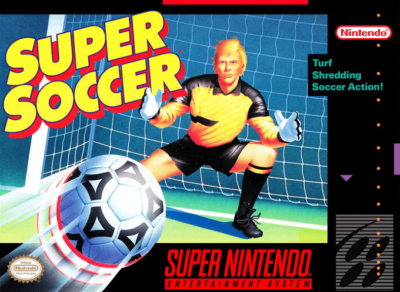
Let's play soccer - the world's favorite sport! In Super Soccer you can choose between an Exhibition mode and a Tournament mode. While the first mode lasts a single game only the Tournament mode challenges you with 16 consecutive games, facing the Nintendo Allstar Team in the final round. The field is shown in a top-down perspective. Scrolling is done by Mode 7 chip. Difficulty varies with the opponent team, ranging from easy to hard in later games in the tournament. After winning a match in the tournament mode, you will be rewarded witch a code in order to pick up the game in the same round of the tournament later on.