
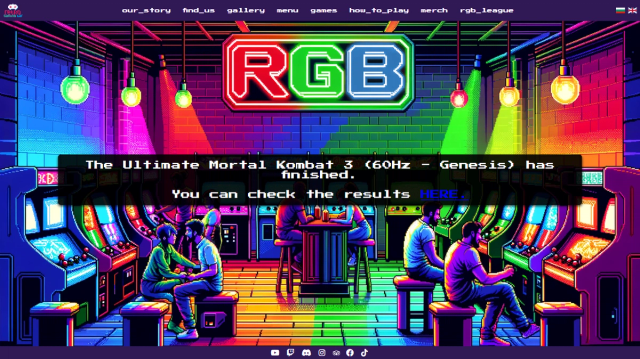
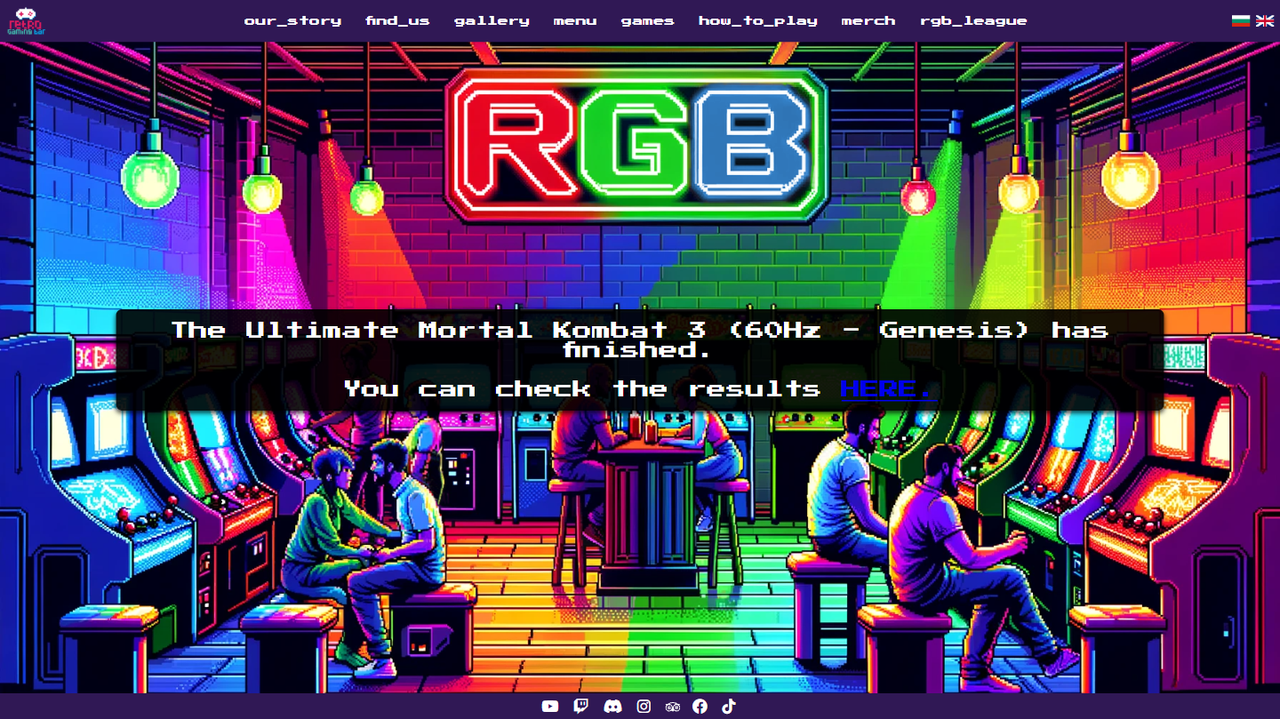
Goodbye, Old Friend — The Story of RGBWeb 1.0
One last tribute to the little website that helped us get started.
If you've been following the story of Retro Gaming Bar, you probably know how ridiculous the months leading up to our grand opening were.Branding, graphic design, interior design, woodworking, painting, moving furniture, collecting games, programming hardware, developing software, and doing pretty much every kind of handiwork imaginable. My to-do list was so long that I'm fairly certain it had developed its own to-do list. Somewhere in the middle of all that madness, my team asked me a seemingly innocent question:
"So, are you ready with the website?"
I looked at them.
"What website?" "The Retro Gaming Bar website." "We don't have a website."
"Well, we need one. How are people supposed to find us?"
Apparently, opening a business in the 21st century also requires having a presence on the internet. Who knew? And just like that, another project joined the already spectacular collection of things I was supposed to finish before March 15, 2024.
A Simple Little 16-Bit Website
At that point, I had absolutely no intention of developing some sophisticated web platform. I needed something simple, practical, and preferably something I could finish before the sun burned out. So I settled on a good old-fashioned static HTML website. No complicated backend. No content management system. No fancy architecture. Just HTML, CSS, a little JavaScript, and enough nostalgic charm to make it feel like it belonged to Retro Gaming Bar. The visual direction was obvious: pixelated graphics, pixel fonts, and an interface inspired by 16-bit video games. And you know what? I still think we nailed that particular objective. Was it the most beautiful website on the internet? bsolutely not. Did it look like something that might have escaped from a Sega Mega Drive? I'd say so! And that was exactly the point.
Coding Between Karate Lessons
Of course, there was still the minor problem of finding the time to actually build it. Between everything happening at RGB, my regular responsibilities, and family life, there simply weren't enough hours in the day. So I started using whatever little pockets of time I could find. One of my favorite memories is sitting in the cafeteria of the National Sports Academy, laptop open, coding the RGB website while my son attended his karate lessons. Some parents read books. Some check their phones. Some enjoy a coffee. I was trying to make a pixelated navigation menu behave itself. Looking back, the whole situation was wonderfully absurd. I'd somehow squeezed website development into the tiny spaces between woodworking, programming gaming tables, painting walls, and being a dad. But eventually, the website was ready. Or so I thought.
The Bulgarian Translation Incident
I remember proudly announcing to my team that RGB finally had a website. They opened it. They looked around. They didn't appear entirely convinced. And then came the question.
"Where's the Bulgarian version?"
I blinked.
"The what?" "The Bulgarian translation."
"Well... there isn't one." "Why not?"
"People can just use their browser to translate it!"
Apparently, that wasn't an acceptable solution. Who would have thought that a bar opening in Sofia might need a website in Bulgarian? Certainly not the genius who had just finished building the entire thing in English. So now I had another problem to solve: how do you add multilingual support to a supposedly simple static HTML website without duplicating everything? Remember, the whole point was that I didn't have time to build anything complicated. And yet, here we were. The website became a little less simple. As websites tend to do.
The Games Page — A Monument to Questionable Decisions
But my personal favorite example of how not to save development time was the games page. Naturally, I wanted visitors to see which games they could play at RGB. We already had a substantial collection, and showing it online seemed like a perfectly reasonable idea. In my head, this would be easy. We had the games organized in folders. Surely JavaScript could just read the directory structure and automatically generate the list? Well, not in the straightforward way I'd imagined from a static page running in a browser. And I didn't have the time to develop a proper solution. So I did what any completely overwhelmed developer with terrible priorities would do.
I added the games manually.
One. By. One. Individual list items. For hundreds of games. Yes, I know.
There's an old saying about being too busy to learn how to drive a car, so you keep wasting your time riding a bicycle everywhere. That was me. Pedaling furiously through hundreds of HTML list items. And the truly ridiculous thing is that I knew perfectly well there were better ways to do it. I simply didn't have the time to implement them. Or, apparently, the time to calculate how much time I was wasting by not implementing them. A classic developer moment.
The Little Website That Did Its Job
Despite all those compromises, RGBWeb 1.0 served us well. It gave Retro Gaming Bar a home on the internet when we desperately needed one. People could discover who we were, find information about the venue, explore our games, and get a little taste of our retro identity before visiting. And in those early days, that was enough. The problem was that RGB didn't stand still. Over the following two years, the bar evolved enormously. We developed new gaming capabilities, introduced tournaments and quizzes, expanded our collection, organized events, created themed cocktails, improved our facilities, and accumulated an incredible number of stories worth sharing. And every time we wanted to update the website, I was reminded of the compromises I'd made when building it. A new article? Manual work. A new feature? More manual work. A change that needed to appear in two languages? You guessed it. The simple little website had become increasingly difficult to maintain. Eventually, we started avoiding changes unless they were absolutely necessary. Not because we had nothing to share, but because sharing it had become unnecessarily complicated. And that's when I realized something important.
RGB had outgrown its website.
Every Limitation Was a Lesson
Here's the funny thing, though. I don't regret building RGBWeb 1.0 the way I did. At the time, it was a conscious compromise. We needed a website quickly, and I was already juggling more responsibilities than any reasonable person should. It wasn't designed to support years of articles, tournament results, event programmes, extensive game statistics, or a growing multilingual content archive. It was designed to help us open a retro gaming bar. And it accomplished that mission. More importantly, every limitation we encountered taught me something about what the next website needed. Every painful manual update, every translation headache, every awkward workaround became another item on the requirements list for RGBWeb 2.0.
We needed a platform that could grow alongside Retro Gaming Bar.
Have we solved every problem? I'd love to say yes. But I've been developing software long enough to know that we've probably just created an exciting new generation of problems we haven't discovered yet. At least this time, we have a much better bicycle. Actually, I think we finally bought the car.
Goodbye, Old Friend
So here we are. After almost three years together, it's time to say goodbye to RGBWeb 1.0 and welcome its successor. Our new website looks different, works differently, and offers considerably more than its predecessor ever could. But there's one thing that hasn't changed.
It was built with exactly the same love.
The original website was created in cafeterias, between karate lessons, during late evenings, and whenever I could steal a little time from the chaos of opening RGB. Its successor was created with the experience, stories, and lessons we've accumulated since then. They're different websites, built for different stages of the same dream. And while RGBWeb 1.0 might look a little rough around the edges today, I still feel a certain affection whenever I see those oversized pixels and old-school fonts. It was never perfect. It was never supposed to be. It was simply there when we needed it. And sometimes, that's the most important thing a piece of software can do.
Goodbye, old friend. You did well.
Thank you for representing Retro Gaming Bar while we were busy becoming what we are today.
GAME OVER?
Not quite.
PRESS START — RGBWeb 2.0
Keep Exploring
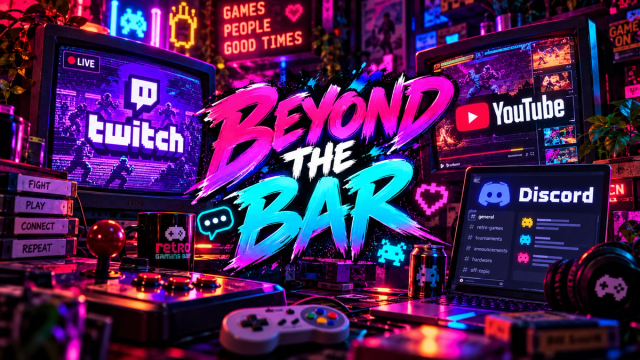
Beyond the Bar — Join the RGB Community Online
The controllers may be unplugged, but the conversation never stops.
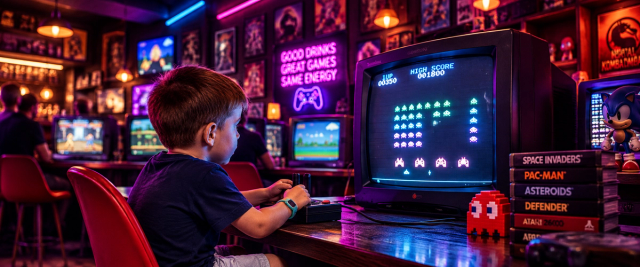
Our Story
One childhood memory. Hundreds of games. Thousands of new stories.
Visit Retro Gaming Bar
Whether you're planning a night out with friends, organizing a private event, exploring a business partnership, or simply have a question, we'd love to hear from you! Retro Gaming Bar is located in the heart of Sofia, where great games, good drinks, and awesome people come together. Come discover hundreds of classic games, enjoy our signature cocktails, and experience a little nostalgia in person.