The Next Tetris

The Next Tetris is not only based on the original Tetris, which was created by Russian designer Alexey Pajitnov back in the mid- to late-1980s, it actually includes a copy of the original game, complete with enhanced graphics and sound. As most people know, Tetris is a game in which you maneuver falling blocks of seven different shapes into unbroken horizontal lines. When a line is created, the blocks in that line (or lines) disappear from the screen. Your job is to keep the pile of blocks from reaching the top of the playfield. The Next Tetris mode of play introduces several new elements to the Tetris universe. The block-maneuvering action remains, but special multi-colored puzzle pieces that can separate and fall when they land enter the mix. Also, blocks above cleared lines will fall to spaces below, possibly setting up a chain reaction, which in this game is called a Cascade.


Информация

RGB Статистика

Общ брой игри
143
Общо изиграни часове
15:47

Припомни си играта

Съдържанието от YouTube е скрито.
Разреши го от - Настройки за бисквитките

Отвори го в YouTube

Разгледай още

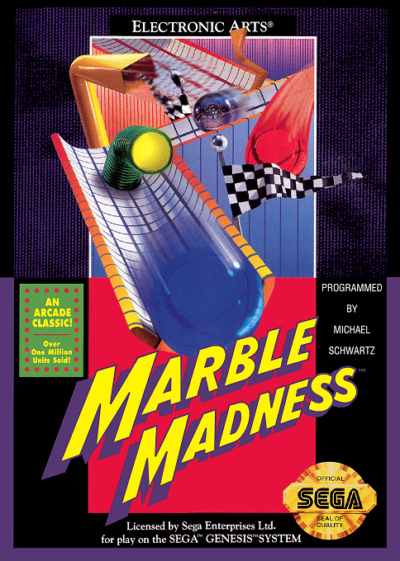
Marble Madness

Marble Madness

A port of the arcade game. The idea is deceptively simple: Guide a marble down a path without hitting any obstacles or straying off the course. The game is viewed from an isometric perspective, which makes it harder to stay focused on the direction the ball is to follow. There are tight corridors to follow and enemies to avoid. There is a 2-player mode in which players must race to the finish; otherwise you're racing against the clock. The version released in Japan has English text and adds trackball support, more difficulty levels, and music closer to the arcade original.

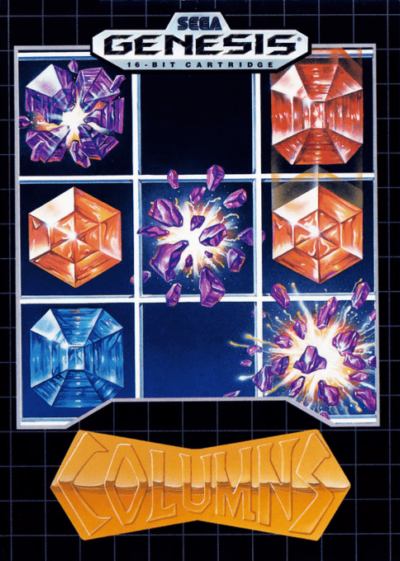
Columns

Columns

Columns is loosely derived from Tetris, as it involves arranging falling blocks in such a way as to clear them. However, in columns they are groups of 3 same-size but varying color blocks, which must be arranged into sequences of 3 or more, either horizontally, vertically or diagonally. Sequences of 4 or 5 count for double or triple points, and diagonal sequences score the most. The real trick is to set up 'combos' - where one line causes other blocks to drop so as to create other lines. As well as the normal game mode, there is also a 'flash' mode, in which the aim is simply to remove a particular block from the base of the pre-formed pile of bricks. The difficulty of this can be determined by increasing the number of complete rows which are already in place.