

Speedball 2 : Brutal Deluxe

Brutal Deluxe doesn't live up to their name - in fact they're the worst team Speedball has ever seen. As their manager, it is your job to transform their fortunes. As well as the league system, which consists of 2 8-team divisions and challenges you to advance to the top, there are also 2 cup tournaments, one of which is played out over 2 'legs' with the aggregate score deciding who progresses. You can play the matches as well, which is the real meat of the game. They consist of 2 90-second periods, and the gameplay is futuristic, fast and frantic, with heavy tackling encouraged to retrieve the ball. Power-ups and tokens appear on the pitch, including ones to make your players extra-tough or freeze the opponents. The sides of the pitch each include a score multiplier, which you can run the ball through to increase the value of your scoring - the opposition can sometimes immediately grab the ball and nullify this. There are also 5 stars which are worth 2 points each if you hit them (more if you have the multiplier activated), but these can also be cancelled out by the opposition hitting the same star, and their points values only become set after the half. Next to the stars there are 'portals' which throw the ball out the opposite side of the pitch, in the direction it was going. You get money for the results, and by collecting the silver tokens which appear on the pitch at random intervals. Between each match you can spend these either on improving your existing players as far as they can go, or on buying better ones and fitting them into the team. Your original players can only be improved to a certain extent, so remembering where your signed players are and making use of them is important. A variety of tokens also appear during the match, some of which boost your team's power for a short period of time, and one freezes the opposition.

Информация

RGB Статистика

Общ брой игри
19
Общо изиграни часове
03:35

Припомни си играта

Съдържанието от YouTube е скрито.
Разреши го от - Настройки за бисквитките

Отвори го в YouTube

Разгледай още

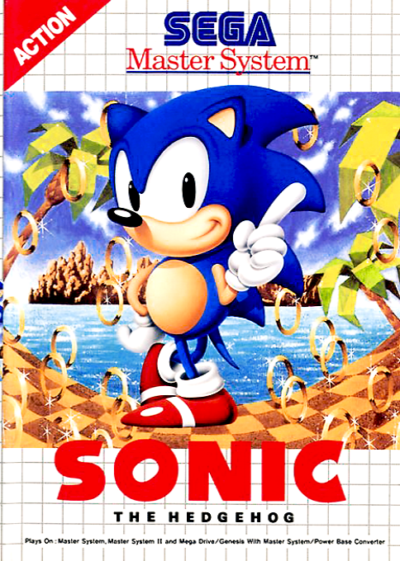
Sonic the Hedgehog

Sonic the Hedgehog

SEGA's mascot Sonic the Hedgehog made his debut in a famous Genesis title, but Sega's 8-bit systems got their own version of the platformer featuring the same story and gameplay style but different levels. To stop the evil Dr. Robotnik, Sonic must traverse six zones consisting of three levels each. Most of the zones are based on the original game, but some are new. Enemies and power-ups are mostly the same as well. Sonic can pick up golden rings for protection (when hit, he simply loses all of his rings instead of a life) and bonuses: 100 rings gain Sonic an extra life, and 50 remaining rings at the end of a level allow access to pinball-themed special stages full of bumpers and springs. The final level of a zone is always a boss fight against Robotnik. Sonic should also collect the six Chaos Emeralds to keep them from falling into Robotnik's hands. In a departure from the original game, these are not hidden in the special stages but somewhere in the regular levels.
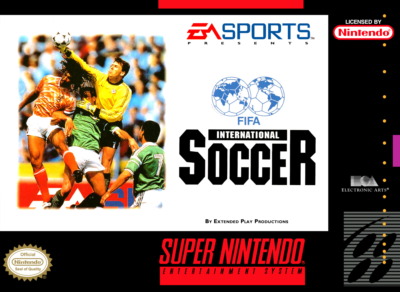
FIFA International Soccer

FIFA International Soccer

The game that started the best-selling series licensed by football's world governing body, this first installment in the long running series used a dimetric (colloquially known as "isometric") viewpoint, previously unusual in football games but quickly imitated by several titles. The televisual presentation, one of the unique points of the early EA Sports titles, with hosts introducing the matches, was another thing making the game stand out from a market dominated by Sensible Soccer and Kick Off games. Based on international teams (with fictional player names), their abilities in each skill area rated out of 10 to give the player an overall impression of how good they are. The options available follow the standard set: fouls and offsides can be toggled on and off, the match length can be set, and if the timer operates continuously, or only while the ball is in play. Gameplay privileges quick runs, short passes and blistering shots outside the penalty box, and set pieces are controlled by moving a box into the target area for the ball, and then passed, lobbed or kicked directly. On the tactical side, formations can be selected, with 5 different strategies also available (although not all of these combinations make sense) as can the team Coverage - the areas which defenders, midfielders and strikers cover.

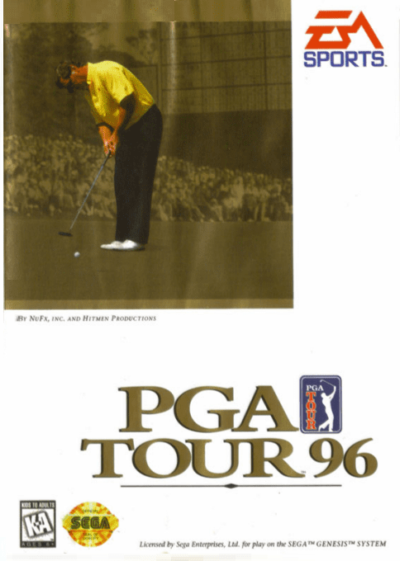
PGA Tour 96

PGA Tour 96

PGA Tour 96 was the last of the series released for Sega's 16-bit console, and technologically the most advanced one. Instead of offering several generic courses, the three available (Spyglass Hill, Sawgrass and River Highlands) are in 3D, with height differences visible (as well as the limited 3D abilities of the console allow). The player can either chose to play as one of the 10 PGA Pros (whose swings were digitized), or go Pro - the game keeps track of statistics (longest drive, driving accuracy, best round, etc), a game (Tournament, Strokeplay, Skins, Match and Shootout), as well as a replay. Gameplaywise, PGA 96 uses the tried-and-proved triple click system - one to start the swing, other to set strength and a final one for accuracy. It's possible to fade or draw the ball (to bend the trajectory), add backspin and pitch or chip the ball (for some medium range attempts at the hole or go above a bush).The difficulty level affects mostly the leniency of the triple click hit areas - while at novice it is possible to let the accuracy a bit off-center, in pro levels the ball goes where your swing took it - no excuses taken. However, only in Pro it is possible to make the longest drives, as the amateur and novice levels take a few yards from the total capacity of the club.