FIFA International Soccer

The game that started the best-selling series licensed by football's world governing body, this first installment in the long running series used a dimetric (colloquially known as "isometric") viewpoint, previously unusual in football games but quickly imitated by several titles. The televisual presentation, one of the unique points of the early EA Sports titles, with hosts introducing the matches, was another thing making the game stand out from a market dominated by Sensible Soccer and Kick Off games. Based on international teams (with fictional player names), their abilities in each skill area rated out of 10 to give the player an overall impression of how good they are. The options available follow the standard set: fouls and offsides can be toggled on and off, the match length can be set, and if the timer operates continuously, or only while the ball is in play. Gameplay privileges quick runs, short passes and blistering shots outside the penalty box, and set pieces are controlled by moving a box into the target area for the ball, and then passed, lobbed or kicked directly. On the tactical side, formations can be selected, with 5 different strategies also available (although not all of these combinations make sense) as can the team Coverage - the areas which defenders, midfielders and strikers cover.

Информация

RGB Статистика

Общ брой игри
81
Общо изиграни часове
12:05

Припомни си играта

Съдържанието от YouTube е скрито.
Разреши го от - Настройки за бисквитките

Отвори го в YouTube

Разгледай още

Speedball 2 : Brutal Deluxe

Speedball 2 : Brutal Deluxe

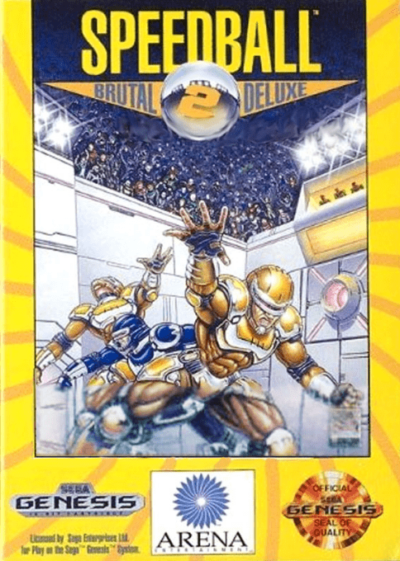
Brutal Deluxe doesn't live up to their name - in fact they're the worst team Speedball has ever seen. As their manager, it is your job to transform their fortunes. As well as the league system, which consists of 2 8-team divisions and challenges you to advance to the top, there are also 2 cup tournaments, one of which is played out over 2 'legs' with the aggregate score deciding who progresses. You can play the matches as well, which is the real meat of the game. They consist of 2 90-second periods, and the gameplay is futuristic, fast and frantic, with heavy tackling encouraged to retrieve the ball. Power-ups and tokens appear on the pitch, including ones to make your players extra-tough or freeze the opponents. The sides of the pitch each include a score multiplier, which you can run the ball through to increase the value of your scoring - the opposition can sometimes immediately grab the ball and nullify this. There are also 5 stars which are worth 2 points each if you hit them (more if you have the multiplier activated), but these can also be cancelled out by the opposition hitting the same star, and their points values only become set after the half. Next to the stars there are 'portals' which throw the ball out the opposite side of the pitch, in the direction it was going. You get money for the results, and by collecting the silver tokens which appear on the pitch at random intervals. Between each match you can spend these either on improving your existing players as far as they can go, or on buying better ones and fitting them into the team. Your original players can only be improved to a certain extent, so remembering where your signed players are and making use of them is important. A variety of tokens also appear during the match, some of which boost your team's power for a short period of time, and one freezes the opposition.

Road Rash 3

Road Rash 3

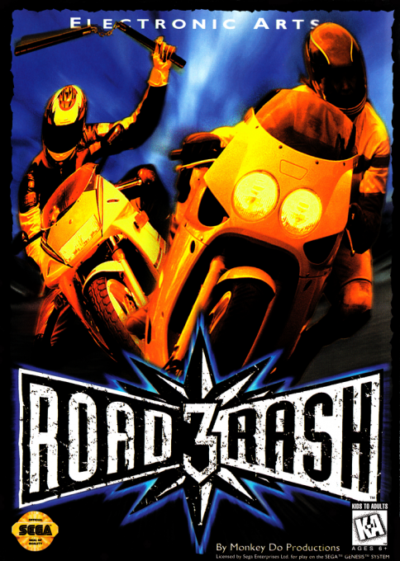
Following the previous two Road Rash games, the player has conquered the US illegal motorcycle championship. But why settle for that when one can take over the World; racing in the peaceful streets of the UK, dodging the animals in Kenya, blaze through the night in Japan or jump in the hilly circuits in Italy? Keeping the same spirit of the previous two games, Road Rash 3 adds all new digitized sprites (based on the 32-bit remake released an year earlier), bike upgrades, more weapons and meaner police. Most other aspects of the game remain unchanged: the player starts on the lowest division with a small amount of cash and a slow, hard to handle bike. To get more money (and get a faster bike) the player must beat as many of the other 15 racers to the finish line, using all means possible, even kicking and punching them into knockout. By clearing (finishing on the top three spots) all five races on a level, the player advances to the next, where opponents are faster and tougher, the police is more active and a longer race. As for new gameplay elements in the final title in the series released for Sega's 16-bit console, bikes can also be improved by choosing cheaper upgrades (instead of simply buying new ones) such as tires (less skidding), engine (improves acceleration and top speed), suspension (allows better control while landing after jumps) and body (bike takes more hits before turning into smoking metal). Instead on relying on simple motorbike patrols, the police now has helicopters at their disposal (which try to land on the player) and patrol cars, which attempt to block the path of the bike, forcing it to stop or collide to get a bust. To make things easier (or harder), new weapons were added, some of which allow the carrier to stun an opponent for a few seconds, making him the perfect victim for an incoming vehicle. Also new, if the player finishes the race with a weapon, carries it to the next race. Each track has it's own features: in the UK, cars drive left on a rainy day, in Australia and Kenya animals wander into the road, in Brazil bikers can get themselves a close-encounter with a car on a crossing, in Italy the hills allow a lot of air-time for light and speedy bikes, Germany, where the icy roads and sharp turns make a deadly combination and finally in Japan the race goes during the night under the neon lights.